Traditional Fencing That Defines Open Boundaries
Split Rail Fencing in Lake Norman for large lots, estates, and rural properties requiring decorative perimeter markers
Rural properties and large residential lots around Lake Norman often lack the hard boundary lines typical of suburban subdivisions, making it difficult to establish clear property edges without blocking the open character that defines the landscape. A & W Fencing, LLC installs split rail fencing that marks boundaries and guides movement across acreage without creating visual barriers or obstructing sightlines across fields and wooded areas. Two-rail and three-rail configurations offer flexibility based on whether you need simple decorative definition or additional height to discourage passage and contain larger animals.
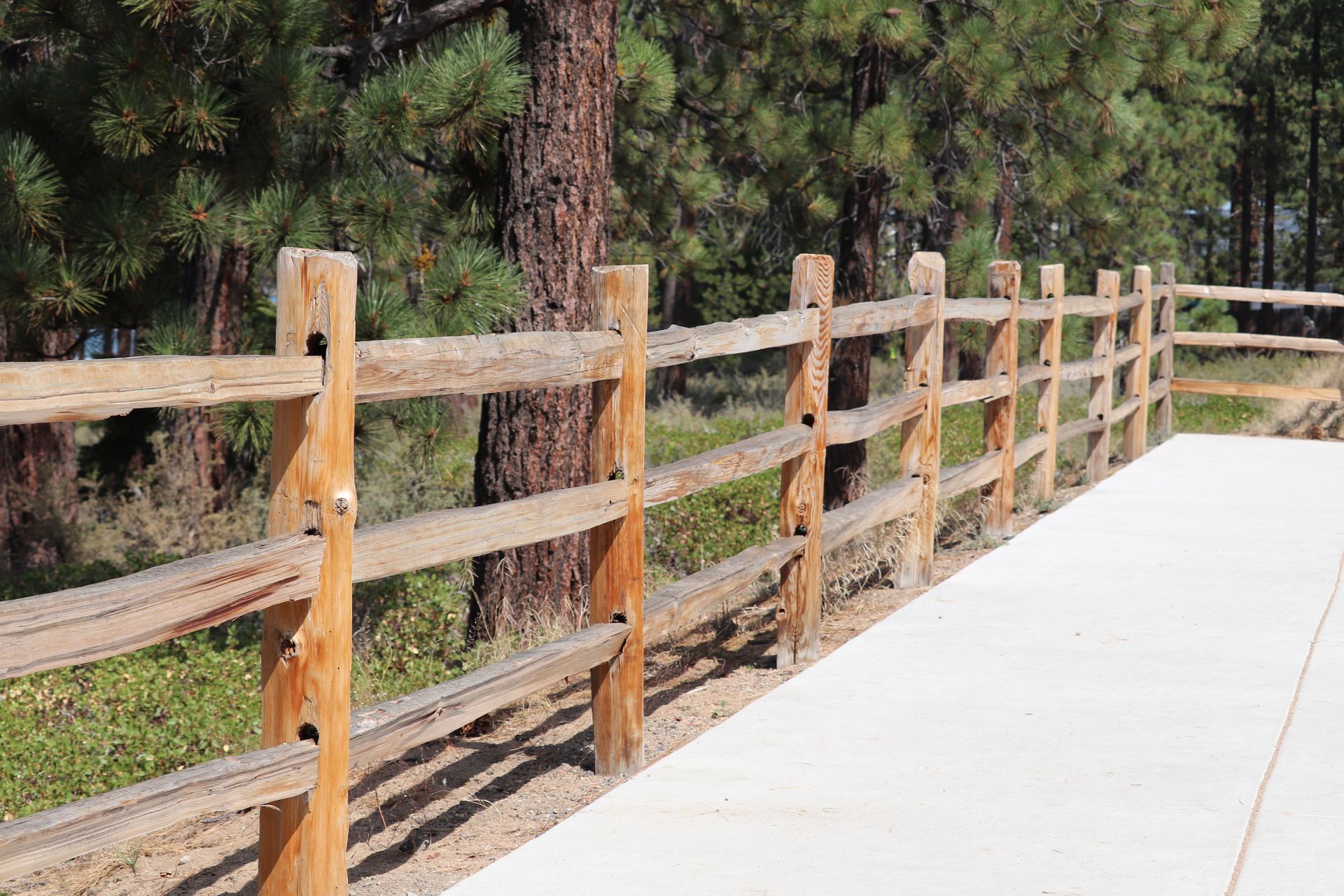
Split rail construction uses horizontal rails slotted into vertical posts, typically spaced eight to ten feet apart, creating a stacked wood framework that follows terrain contours naturally. Three-rail designs provide roughly four feet of height, suitable for property boundaries where you want moderate containment, while two-rail versions offer a lower profile that maintains openness across front yards and decorative sections where the goal is visual definition rather than functional enclosure. Wire mesh can be attached to the interior side when livestock containment or small animal exclusion becomes necessary without altering the traditional appearance from the street or neighboring properties.
Request a site consultation to review rail configurations and post placement based on your property's topography.
How Split Rail Layouts Adapt to Property Features
Post placement follows natural elevation changes and existing landscape features rather than forcing straight lines across uneven ground. Rails slope gently between posts on hillsides, and corners turn without requiring complex joinery, allowing the fence to trace property lines through wooded sections, around ponds, and along roadways without extensive grading or terrain modification. Wood species selection affects longevity, with treated pine offering economy and cedar providing natural rot resistance in areas where ground contact and moisture exposure accelerate decay.
After installation, you notice a clearly defined edge that guides visitors, marks driveways, and separates functional areas like pastures from landscaped yards. The fence weathers to a gray patina over time, blending with natural surroundings while maintaining structural integrity as the wood seasons and stabilizes. Rails remain seated in post mortises without sagging, and the open design allows wind to pass through without creating uplift or racking forces that would destabilize solid panel fencing in exposed locations.
Gates integrate into split rail layouts using hinged sections that match the rail pattern, or standalone gate frames that transition between fenced areas and open access points. Spacing between rails determines what the fence contains—three-rail designs with added wire mesh handle livestock, while two-rail decorative runs simply establish visual boundaries without functional containment expectations.
Common Questions About This Service
Estate and acreage owners in Mecklenburg County frequently ask about material durability, layout customization, and how split rail fencing integrates with other property features.
What wood types hold up best in North Carolina's climate?
Cedar resists rot and insect damage naturally due to oil content in the wood, making it suitable for ground-contact applications without chemical treatment, while pressure-treated pine offers a more economical option with preservatives that extend lifespan in wet soil conditions common across Lake Norman properties.
How does wire mesh attachment work with split rail fencing?
Welded wire or woven mesh staples to the interior side of posts and rails, creating a containment barrier for horses, goats, or dogs while keeping the traditional split rail appearance visible from the road and neighboring properties.
When is three-rail preferable to two-rail construction?
Three-rail configurations provide additional height and visual weight suitable for perimeter boundaries, pasture divisions, and areas where you want moderate containment without installing full privacy fencing, while two-rail designs work for decorative front yard sections and locations where boundary definition matters more than functional enclosure.
What maintenance does split rail fencing require over time?
Wood naturally weathers and develops surface cracks as it dries, which doesn't compromise structural performance but can be slowed with periodic sealing if maintaining original color matters, though most rural property owners allow the fence to age naturally to a silver-gray finish that blends with wooded settings.
How do post footings perform in clay soils typical of this region?
Posts set directly in tamped soil or gravel backfill allow seasonal ground movement without heaving, which works better than concrete footings in expansive clay conditions where freeze-thaw cycles create shifting that can crack rigid anchoring systems and destabilize the fence line.
A & W Fencing, LLC designs split rail layouts that follow your property's natural contours and integrate with existing landscape features. Arrange a property walk-through to identify optimal post locations and discuss mesh options if containment becomes part of your fencing goals.