Perimeter Systems Built for Livestock and Equipment
Farm & Agricultural Fencing in Lake Norman for ranches, working farms, and properties requiring pasture division and secure livestock containment
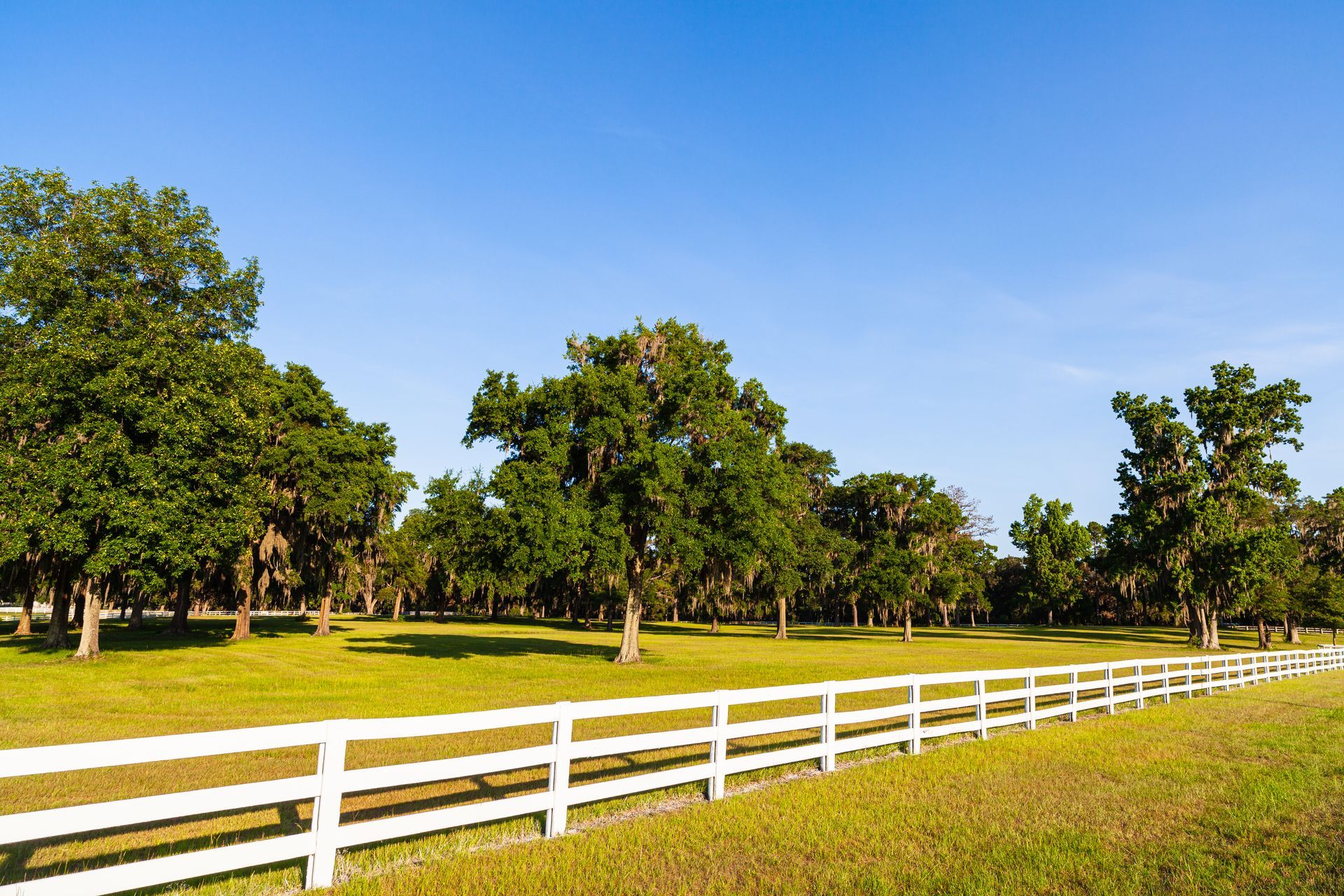
Pasture fencing across Mecklenburg County farms fails when post spacing, wire tension, and gate placement don't account for livestock behavior, equipment traffic, and daily operational demands that suburban fencing never encounters. Horses lean on fence lines, cattle test weak corners, and tractors require wide clearances at field access points. A & W Fencing, LLC designs agricultural fencing systems for properties where containment, durability, and accessibility determine whether the installation supports farm operations or creates ongoing maintenance burdens that pull labor away from more productive tasks.
Agricultural fencing construction varies significantly based on livestock type, property terrain, and how the land gets used throughout the season. High-tensile wire stretched between braced corner posts creates flexible barriers that absorb impact without breaking, suitable for cattle and horses when paired with appropriate strand counts and height configurations. Woven wire with smaller mesh openings prevents smaller animals like goats and sheep from pushing through or getting entangled. Gates position where equipment enters fields, where paddocks connect, and where daily feeding and movement patterns require access without dismantling fence sections or creating shortcuts that compromise the perimeter.
Schedule a site evaluation to review pasture layouts, livestock types, and equipment access needs before finalizing fence design.
What Proper Agricultural Fencing Requires
Posts must resist the constant pressure livestock apply to fence lines, particularly at feed stations, water sources, and shade areas where animals congregate and lean against the barrier. Treated wood posts set at least three feet deep in clay soils provide anchoring strength, while corner assemblies use bracing systems that transfer tension loads into the ground rather than relying solely on the post to resist pulling forces that develop when wire stretches across long runs. Wire gauge, strand count, and spacing intervals all adjust based on what you're containing—cattle require fewer, higher strands than sheep, and horses need visibility to avoid running into fencing they don't perceive clearly.
Once your fencing is complete, you notice livestock remain within designated pastures without escaping through gaps or pushing under sagging wire. Gates swing wide enough for tractor passage and close securely without dragging or requiring realignment after each use. Wire maintains tension across elevation changes without developing low spots where animals push through, and corner braces hold firm even when livestock crowd against the fence during feeding or when weather drives them toward sheltered areas.
A & W Fencing, LLC accounts for terrain variations, existing tree lines, and how seasonal ground movement affects post stability across multi-acre installations. The fencing accommodates expansion for future paddock divisions or pasture rotations, and gate placements reflect how you actually move animals and equipment rather than forcing inefficient traffic patterns that waste time during daily operations.
Answers to Frequent Service Questions
Farm and ranch owners around Lake Norman often need clarity on material selection, layout planning, and how fencing integrates with rotational grazing or mixed livestock operations.
What wire types work best for cattle versus horses?
High-tensile smooth wire in four or five-strand configurations suits cattle when strands are spaced to prevent reaching through, while horses benefit from wider-spaced wire combined with visibility enhancements like top boards or flagging that prevent collision injuries in low-light conditions when they run along fence lines.
How does gate width affect daily farm operations?
Twelve-foot gates accommodate standard tractors, hay wagons, and most farm equipment without requiring precise alignment, while sixteen-foot openings allow larger combines or trailers to enter fields without risk of clipping posts or damaging gate frames during tight turns.
When should I use woven wire instead of smooth strand options?
Woven wire with graduated spacing—tighter mesh near the ground and wider openings higher up—contains smaller livestock like goats and sheep that can slip through strand fencing, and it prevents hoof entanglement better than barbed wire when animals test the barrier.
What corner bracing prevents wire tension from pulling posts out of alignment?
H-braces and diagonal compression struts transfer tension from the stretched wire into horizontal compression forces that push against anchored posts rather than pulling them toward the field center, preventing the lean and eventual failure common with single-post corners on long fence runs.
How do soil conditions in this region affect post longevity?
Clay soils retain moisture that accelerates wood decay at the ground line, making treated posts essential for installations expected to last beyond a decade, while proper backfilling with gravel around the post base improves drainage and reduces direct wood-to-soil contact that promotes rot.
A & W Fencing, LLC provides customized fencing plans that reflect your property's specific livestock, terrain, and operational requirements. Contact us to discuss wire options, gate configurations, and layouts designed for long-term agricultural use.